Learn how to identify Termites, why they are a concern for Connecticut homeowners, and when to call a licensed pest control professional like Richland Pest & Bee Control.
Termites are one of the most destructive pests a homeowner can face, especially because they often stay hidden while feeding on wood, flooring, and other cellulose materials inside a structure. In Connecticut, subterranean termites are the most common concern, and they can quietly cause serious damage before they are ever noticed. Homes in West Hartford and throughout CT are especially vulnerable when moisture, wood-to-soil contact, or small foundation openings give termites a way in.
Because termite activity is often difficult to detect early, many homeowners do not realize they have a problem until repairs become costly. These pests thrive in our regional climate and can remain active for long periods if left untreated. That is why prompt inspection and professional termite control are so important for protecting your home and preventing long-term structural damage.
Termites are small insects that feed on wood and other materials that contain cellulose, which is found in things like framing, flooring, drywall, and even paper products. Because they often stay hidden inside walls, floors, and foundations, they can cause serious damage long before a homeowner notices a problem. In Connecticut, termites are a concern because they can weaken the structure of a home and lead to costly repairs if they are not found early.
There are several types of termites, but the most common problem for homeowners is the subterranean termite, which lives in the soil and travels into a building to feed. Signs of termite activity can include discarded wings, mud tubes, hollow-sounding wood, and bubbling paint. Since termite damage can be difficult to spot on your own, a professional inspection is often the best way to find them early and protect your home.
Termites are often identified by subtle signs around the home, such as mud tubes along foundation walls, hollow-sounding wood, discarded wings near windows or doors, and wood that looks blistered, warped, or damaged from the inside out. Homeowners may also notice small piles of pellet-like droppings, sticky doors or windows, or swarming insects in spring. Because termite activity can be hidden behind walls, floors, and trim, even a few of these warning signs should be taken seriously and inspected quickly.
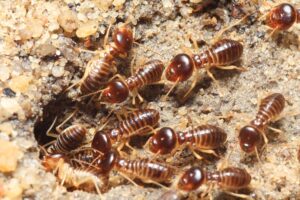
Homeowners in Connecticut should know that termite activity in our area is usually linked to a few key species. The most common concern is the eastern subterranean termite, but a few other types can occasionally turn up as well. Knowing the differences can help you spot warning signs early and protect your home.
Eastern subterranean termites: This is the main termite species found in Connecticut. They live underground, build mud tubes to reach wood, and can cause serious structural damage before they are noticed.
Drywood termites: These are much less common in Connecticut. They live inside dry wood and do not need soil contact, which means they are sometimes brought in through infested furniture, lumber, or other wood items.
Formosan subterranean termites: These termites are not common in Connecticut, but they are a major termite species to know about in the Northeast. They are a more aggressive type of subterranean termite and can damage wood quickly if they become established.
When termites are suspected, a professional inspection is the best way to confirm the species and determine the right treatment plan.
Homeowners should be concerned about termites because these pests can quietly damage the structural wood in a home long before the problem is noticed. Termites feed on cellulose found in wood, drywall, and other building materials, which means they can weaken beams, flooring, walls, and support structures from the inside out. In many cases, the signs are subtle until the damage becomes expensive to repair. For homeowners in West Hartford, CT, termite activity can lead to major repair costs, decreased home value, and ongoing stress if the infestation is not addressed quickly. Early detection and professional treatment are the best ways to protect your home and avoid serious long term damage.
Homeowners can reduce the risk of termite activity by keeping moisture down, limiting wood-to-soil contact, and staying proactive with regular inspections. Since termites often stay hidden until damage has already started, the best protection is a combination of preventive habits and professional help from Richland Pest & Bee Control.
Homeowners should hire a professional for termite control because termites can cause serious structural damage long before the signs become obvious, and a trained technician knows how to detect activity, identify the source, and use the right treatment for the infestation. Professional termite control also provides safer, more effective products and a targeted plan that helps protect your home, reduce the chance of reinfestation, and save money by addressing the problem early instead of waiting for costly repairs.
MOST ACTIVE
In warm, humid months
COMMON AREAS
Wood, foundations, and damp areas.
MAIN CONCERNS
Structural damage and costly repairs
LOCAL SERVICE
West Hartford and surrounding CT Communities
