Learn how to identify Squirrels, why they are a concern for Connecticut homeowners, and when to call a licensed pest control professional like Richland Pest & Bee Control.
Squirrels are a familiar sight across Connecticut, especially in wooded neighborhoods, suburban yards, and areas near homes with mature trees. While they may seem harmless outdoors, squirrels can quickly become a nuisance when they begin nesting in attics, chewing on wood, tearing insulation, and finding their way into vents or soffits.
In West Hartford and throughout CT, squirrels are one of the more common household pests because they are highly adaptable and always searching for food, shelter, and a safe place to raise their young. Once they get inside a home, they can cause damage fast, which is why prompt squirrel control is important for protecting both your property and peace of mind.
Squirrels are small to medium-sized rodents that are common throughout Connecticut, especially in neighborhoods with mature trees, attics, and bird feeders. The most common type homeowners see is the eastern gray squirrel, though fox squirrels and flying squirrels can also be found in the area. They have strong teeth that never stop growing, so they constantly chew on nuts, branches, siding, shingles, and even electrical wiring to keep them worn down.
While squirrels may look harmless, they can cause real problems when they get into homes, garages, or attics. They build nests, leave droppings, and may damage insulation or create entry points that allow more wildlife inside. Squirrels are active during the day and often become more noticeable in fall and winter as they look for food and shelter.
Squirrels are usually easy to recognize by their medium size, bushy tail, and quick, jerky movements. In Connecticut, the most common ones are gray or reddish-brown with a white or light-colored belly, large eyes, and strong hind legs for climbing. Homeowners often notice them during the day, especially when they are running along rooflines, jumping between trees, or entering small gaps near the attic, soffits, or vents. Signs inside the home can include scratching or scampering sounds, chewed wood or wires, and shredded nesting material. If you are seeing these signs, a squirrel may be nesting nearby or inside your home.

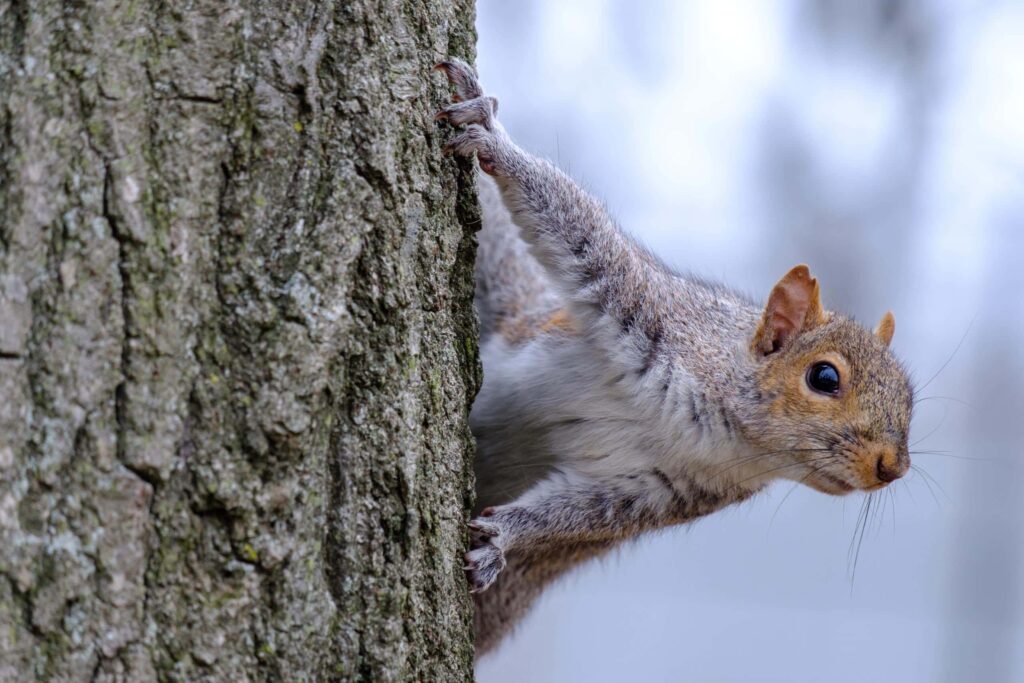
Connecticut is home to a few common squirrel species that homeowners may see around trees, roofs, and attics. Knowing the difference can help you better understand their habits and the kind of damage they may cause.
Homeowners should be concerned about squirrels because these active rodents can cause serious damage once they get into an attic, crawl space, or walls. Squirrels chew constantly to keep their teeth from growing too long, which can lead to damage to wood, insulation, wiring, vents, and stored belongings. They also create nests that can block airflow and leave behind droppings and urine, which can cause strong odors and attract other pests. In addition to property damage, squirrels may carry parasites and diseases, making them a health concern for families and pets. If they find a way inside or start nesting near your home, they can quickly become a costly problem that should be addressed right away.
Squirrels can quickly become a nuisance when they find easy access to food, shelter, or entry points around a home. Taking a few simple prevention steps can help reduce the chances of an infestation and protect your attic, roofline, and outdoor spaces.
Homeowners should hire Richland Pest & Bee Control for squirrel control because our team understands how quickly squirrels can damage attics, chew wiring, contaminate insulation, and create ongoing stress for your household. We provide reliable, professional service tailored to local homes in West Hartford, CT, with a focus on identifying how squirrels are getting inside, removing them safely, and helping prevent them from coming back. Our experienced technicians use proven methods to address the problem at its source, protect your property from further damage, and give you peace of mind with prompt, courteous service you can trust.
MOST ACTIVE
Dawn and dusk
COMMON AREAS
Attics, roofs, and gutters
MAIN CONCERNS
Property damage and health risks
LOCAL SERVICE
West Hartford and surrounding CT Communities
