Learn how to identify ground bees, understand why they may appear in Connecticut lawns and landscapes, and know when it may be time to contact a licensed pest control professional like Richland Pest & Bee Control.
The term “ground bees” is often used to describe bees that nest in the soil rather than in hives, trees, or wooden structures. Unlike honey bees, most ground bees are solitary insects, meaning each female creates and maintains her own nest. They do not live in large colonies and are generally considered beneficial pollinators.
In Connecticut, homeowners frequently notice ground bee activity during the spring and early summer when dozens or even hundreds of small holes suddenly appear in lawns, garden beds, or areas of bare soil. While these bees can be alarming due to the number of nests present, they are typically far less aggressive than social stinging insects such as yellow jackets.
It’s also important to note that many people use the term “ground bees” to describe any stinging insect nesting in the ground. In reality, some insects found nesting underground are actually yellow jackets or solitary ground-nesting wasps, which behave very differently.
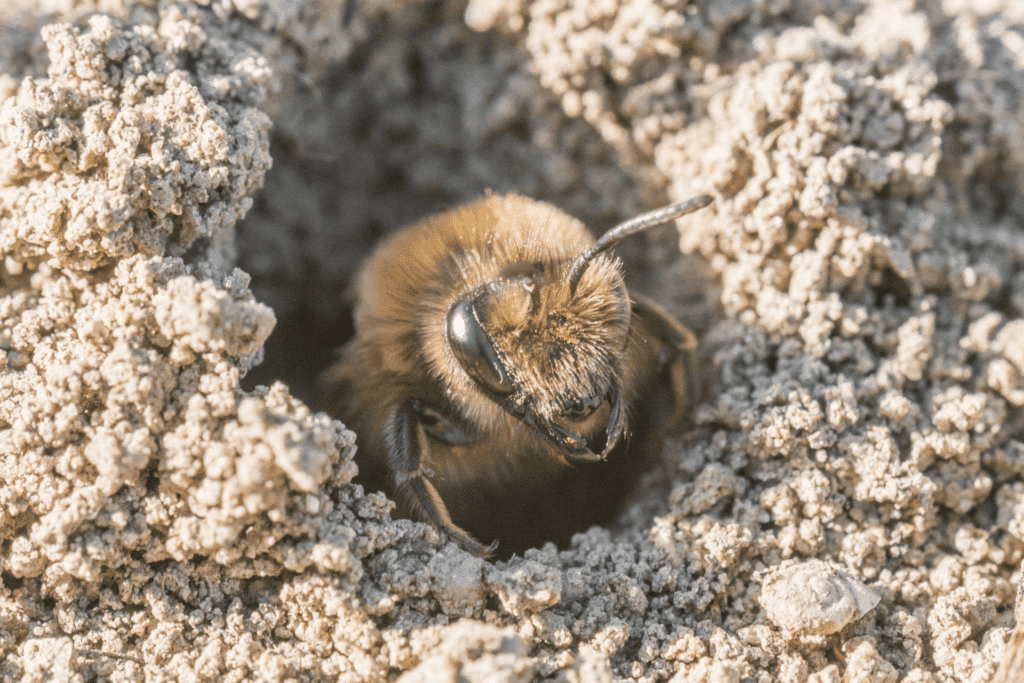
Ground bees vary in appearance depending on the species, but many share similar characteristics.
Common features include:
● Approximately ¼ to ¾ inch long
● Brown, black, or metallic-colored bodies
● Hairy appearance designed to collect pollen
● Less slender than wasps
● Often seen flying low over the ground
● Active around flowers and blooming plants
Because there are many species of ground-nesting bees, proper identification can help determine whether the insects are harmless pollinators or more defensive stinging insects.
Ground bees prefer well-drained soil in areas exposed to sunlight.
Common nesting locations include:
● Lawns with sparse grass coverage
● Garden beds
● Mulched landscape areas
● Bare patches of soil
● Sloped yards
● Sidewalk edges
● Areas beneath shrubs
● Sandy or loose soils
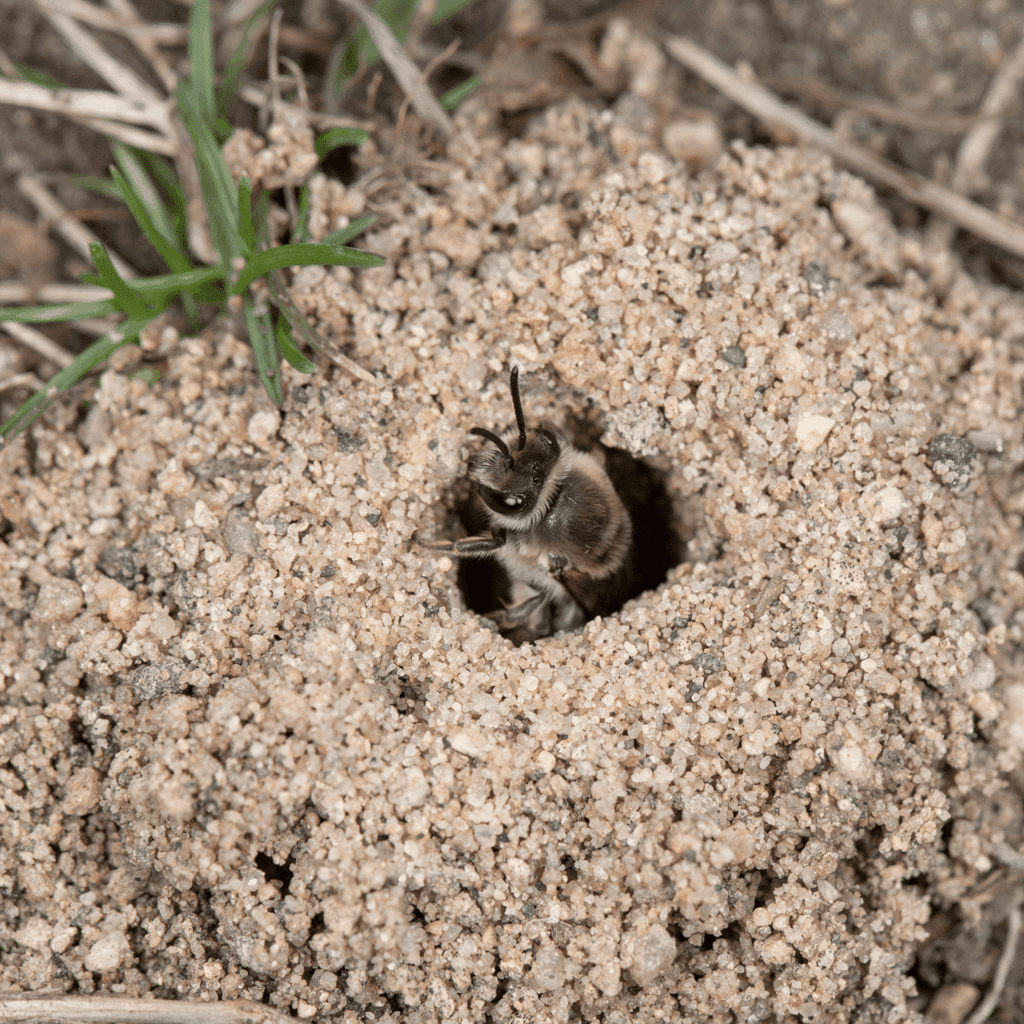
Each female excavates a small tunnel in the ground, often leaving behind a mound of loose soil near the entrance.
When large numbers of females choose the same area for nesting, it can appear as though a colony has formed, even though each nest is maintained independently.
Ground bee activity generally follows a seasonal pattern in Connecticut.
Many species emerge as temperatures begin to warm. Homeowners may suddenly notice increased bee activity in their yards.
Females build nests, gather pollen and nectar, and provision chambers for developing offspring.
Most ground bee activity declines significantly, depending on the species.
Developing bees remain underground until environmental conditions trigger emergence the following season.
Many species are only active above ground for a few weeks each year.
Ground bees are generally considered non-aggressive.
Female ground bees are capable of stinging but rarely do unless they are directly handled, stepped on barefoot, or trapped against the skin.
Male ground bees cannot sting at all.
Although large numbers of nesting holes may seem intimidating, most homeowners can coexist with ground bees without experiencing stings.
Yes. Ground bees are valuable pollinators that support:
● Flowering plants
● Vegetable gardens
● Native wildflowers
● Fruit trees
● Local ecosystems
By transferring pollen between plants, they help promote healthy plant growth and contribute to biodiversity throughout Connecticut.
Because many species have relatively short active periods and pose little threat to people, they are often considered beneficial insects.
Homeowners may notice several indicators of ground bee nesting.
Common signs include:
● Small holes scattered throughout the lawn or landscape
● Tiny mounds of loose soil around openings
● Bees flying low over grassy areas
● Increased activity during warm, sunny days
● Multiple nests clustered in the same area
These signs are often most noticeable during the spring.
Because both may nest in the ground, they are frequently confused with one another.
● Usually solitary
● Hairy bodies
● Important pollinators
● Generally non-aggressive
● Rarely sting
● Small mounds of loose soil around nest entrances
● Social wasps living in colonies
● Smooth, shiny bodies
● More aggressive when disturbed
● Can sting multiple times
● Frequently use abandoned rodent burrows
● May emerge in large numbers from a single entrance
Correct identification is important because the appropriate response can vary significantly
Because ground bees are beneficial pollinators, many homeowners choose to tolerate their temporary presence. However, certain steps may help make nesting areas less attractive.
Helpful prevention measures include:
● Maintain thick, healthy turf grass.
● Reduce areas of exposed soil when practical.
● Add mulch to garden beds.
● Improve irrigation practices in overly dry areas.
● Overseed bare patches in lawns.
● Monitor areas where activity has occurred previously.
Because many species naturally relocate from year to year, activity may decline on its own.
MOST ACTIVE
During warm daylight hours
COMMON AREAS
lawns, garden beds, bare soil, and slopes.
MAIN CONCERNS
Stings, nests, allergic reactions
LOCAL SERVICE
West Hartford and surrounding CT Communities
Click through the questions below to learn more about ground bee identification and control options from Richland Pest & Bee Control. If you have any additional questions, feel free to reach out by contacting us online, or giving us a call at 1-800-308-9126.
No. Most ground bees are very docile and rarely sting unless directly provoked.
Most species are solitary, although many females may choose to nest close together in favorable locations.
Yes. They are important pollinators that support gardens, flowering plants, and local ecosystems.
Ground bees generally cause minimal damage. The small holes and soil mounds they create are usually temporary and cosmetic.
For most homeowners, ground bees are more of a nuisance than a threat. However, if activity occurs in high-traffic areas or if household members have known sting allergies, professional guidance may be appropriate.
Ground bees are a common sight throughout Connecticut during the spring and early summer. While their sudden appearance can be surprising, these insects are typically gentle pollinators that play an important role in the environment. Understanding how to identify ground bees, recognize the signs of nesting activity, and distinguish them from more aggressive ground-nesting insects can help homeowners make informed decisions when they encounter them around their property
