Learn how to identify yellow jackets, understand why they can become a concern for
Connecticut homeowners, and know when it may be time to contact a licensed pest control
professional like Richland Pest & Bee Control.
Learn how to identify cicada killer wasps, understand why they may appear around Connecticut homes, and know when it may be time to contact a licensed pest control professional like Richland Pest & Bee Control.
Cicada killer wasps are large, solitary wasps that are best known for hunting cicadas to provide food for their developing young. Despite their intimidating size, cicada killers are generally considered non-aggressive and rarely sting people.
These wasps are commonly found throughout Connecticut during the summer months and are often noticed when they begin digging burrows in lawns, gardens, playgrounds, and areas of exposed soil. Because of their size and appearance, homeowners frequently mistake them for hornets or other aggressive stinging insects.
Although they can become a nuisance when nesting in high-traffic areas, cicada killer wasps play an important role in the ecosystem by helping regulate cicada populations.
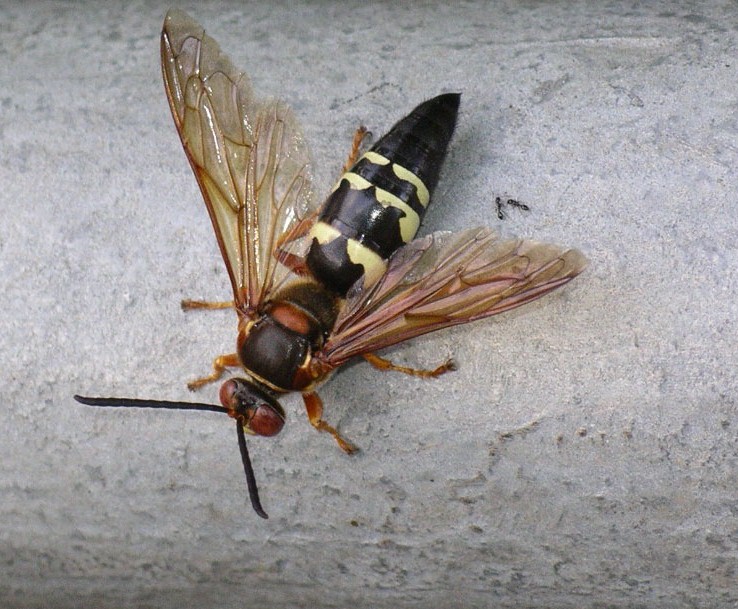
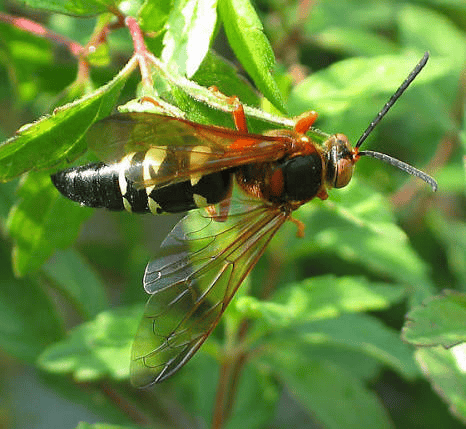
Cicada killer wasps are among the largest wasps found in Connecticut.
Common characteristics include:
● Approximately 1½ to 2 inches long
● Reddish-brown head and thorax
● Black abdomen with yellow markings or bands
● Amber-colored wings
● Thick, robust bodies
● Fast, purposeful flight patterns
Because of their size, cicada killers are often confused with European hornets. However, cicada killers have different markings, nesting habits, and behavior.
Cicada killers prefer loose, sandy, or well-drained soil that is exposed to sunlight.
Common nesting locations include:
● Lawns with sparse grass coverage
● Garden beds
● Playground areas
● Sidewalk edges
● Mulched landscapes
● Sandboxes
● Sloped yards
● Areas beneath shrubs
● Exposed soil near patios and walkways
Female cicada killers excavate burrows that may extend several inches to more than a foot below the surface. Small mounds of displaced soil often accumulate around the nest entrance.
Although many females may choose to nest in the same area, they do not live in colonies like yellow jackets or hornets.
Cicada killer wasps get their name from the unique way they provision their nests.
Female cicada killers hunt and paralyze cicadas, carrying them back to underground chambers where they are used as food for developing larvae. After placing one or more cicadas into a chamber, the female lays an egg before sealing it.
When the larva hatches, it feeds on the cicada before continuing its development underground.
Cicada killer activity is most noticeable during the middle and late summer months.
Adults begin emerging from overwintering chambers underground.
Mating occurs, and females begin excavating burrows and hunting cicadas.
Nest construction and provisioning continue as larvae develop below ground.
Adults die off with cooler temperatures, while immature cicada killers remain underground until emerging the following summer.
Because cicada populations increase during the summer, cicada killer activity often peaks around the same time.
Female cicada killer wasps are capable of stinging but are generally very docile and rarely sting people.
Male cicada killers, which are often seen aggressively patrolling nesting territories and hovering near people, cannot sting because they do not possess stingers.
This behavior frequently alarms homeowners, even though males pose no threat.
Most stings occur only if a female is directly handled, stepped on barefoot, or trapped against the skin.
If you discover yellow jacket activity around your home, avoid disturbing the nest.
Do not attempt to:
● Kick or cover underground entrances
● Dig up nests
● Spray nests without proper knowledge and equipment
● Seal entry points while the colony is active
● Use lawn equipment near active nest entrances
Instead:
● Keep children and pets away from the area.
● Mark the location so others can avoid it.
● Observe activity from a safe distance.
● Consider contacting a licensed pest professional if the nest is located near areas of regular use.
Because yellow jackets aggressively defend their colonies, do-it-yourself removal attempts can increase the risk of multiple stings.
For most people, cicada killers pose very little risk.
Although their large size can be intimidating, they are far less aggressive than yellow jackets, hornets, and paper wasps.
However, as with any stinging insect, individuals with allergies to insect venom should exercise caution and seek immediate medical attention if they experience symptoms of a severe allergic reaction.
Seek emergency medical care if someone develops:
● Difficulty breathing
● Swelling of the face or throat
● Dizziness or fainting
● Rapid heartbeat
● Widespread hives
● Signs of anaphylaxis
Cicada killer burrows can create cosmetic disturbances in lawns and landscaped areas.
Homeowners may notice:
● Small holes in the ground
● Crescent-shaped mounds of loose soil
● Bare patches of turf
● Increased wasp activity over specific areas
While these burrows can be unsightly, they typically do not cause significant structural damage to lawns or landscapes.
Most concerns arise when activity occurs in areas where children or pets regularly play.
Several indicators may suggest cicada killers are nesting nearby.
Common signs include:
● Large wasps flying low over the ground
● Solitary wasps entering and exiting soil openings
● Mounds of loose dirt surrounding holes
● Wasps carrying large cicadas
● Increased activity in sunny areas with exposed soil
Because they do not build paper nests, underground burrows are usually the most obvious sign of activity.
If cicada killers are present on your property, avoid disturbing their burrows unnecessarily.
Instead:
● Keep children and pets from digging near nest entrances.
● Avoid stepping barefoot in active nesting areas.
● Observe activity from a safe distance.
● Monitor whether activity is occurring in high-traffic areas.
● Consider contacting a licensed pest professional if the infestation is extensive or located where people regularly gather.
Because cicada killers are solitary and generally non-aggressive, immediate action is not always necessary.
Although nesting cannot always be prevented, a few practices may help reduce favorable conditions.
Helpful prevention tips include:
● Maintain thick, healthy turf grass.
● Overseed bare patches in the lawn.
● Reduce exposed areas of loose soil.
● Add mulch to garden beds when appropriate.
● Improve irrigation in overly dry areas.
● Monitor areas with a history of activity.
Since cicada killers prefer sunny, sparsely vegetated soils, reducing these conditions may discourage nesting.
MOST ACTIVE
During warm daylight hours
COMMON AREAS
Eaves, attics, decks, and yards
MAIN CONCERNS
Stings, nests, allergic reactions
LOCAL SERVICE
West Hartford and surrounding CT Communities
Click through the questions below to learn more about beetle pest control and treatment options from Richland Pest & Bee Control. If you have any additional questions, feel free to reach out by contacting us online, or giving us a call at 1-800-308-9126.
No. Cicada killers are generally very docile. Males may appear aggressive while defending territory, but they cannot sting.
Yes. Females can sting but rarely do unless directly threatened or handled.
No. They are solitary wasps. Although many females may nest near one another, each maintains her own burrow independently.
Male cicada killers patrol territories and investigate movement. While this behavior can be startling, males cannot sting.
Yes. They help regulate cicada populations and are considered an important part of the local ecosystem.
Cicada killer wasps are impressive insects that are often misunderstood because of their large size and intimidating appearance. In reality, they are solitary hunters that rarely sting and help control cicada populations throughout Connecticut. Understanding how to identify cicada killers, recognize the signs of nesting activity, and distinguish them from more aggressive stinging insects can help homeowners make informed decisions when they encounter these fascinating wasps around their property.
