Learn how to identify Centipedes & Millipedes, why they are a concern for Connecticut homeowners, and when to call a licensed pest control professional like Richland Pest & Bee Control.
Centipedes and millipedes are common nuisance pests in Connecticut homes, especially in damp, dark areas like basements, crawl spaces, bathrooms, and laundry rooms. Although they are often seen indoors during periods of rain or changing weather, their presence usually signals moisture issues and easy entry points around the home. Centipedes move quickly and can startle homeowners, while millipedes tend to gather in groups and become a recurring problem when conditions stay humid.
In West Hartford and throughout CT, these pests are most active when they find the cool, sheltered environments they prefer. While centipedes and millipedes do not typically cause structural damage, they can be a frustrating household pest and a sign that your home may need better pest control and moisture management. Richland Pest & Bee Control helps homeowners identify where these pests are coming from and develop effective solutions to keep them out.
Centipedes and millipedes are long, many-legged arthropods that often show up in damp areas around homes. Centipedes are active predators with one pair of legs per body segment, and they move quickly as they hunt insects and other small pests. Millipedes have two pairs of legs per segment, move more slowly, and usually feed on decaying organic material like leaves and mulch. Both can become nuisance pests when they wander indoors, especially during wet weather or when conditions outside become too dry.
While these pests rarely cause structural damage, their presence can be a sign of excess moisture, gaps around the foundation, or nearby clutter that gives them shelter. Centipedes may bite if handled, and millipedes can release a harmless but irritating fluid when disturbed. Reducing moisture, sealing entry points, and keeping the area around the home clean can help keep them out.
Centipedes and millipedes are both long, many-legged arthropods, but they are easy to tell apart once you know what to look for. Centipedes have flat bodies, one pair of legs per body segment, and move quickly, often darting away when disturbed. They usually have long antennae and are found in damp, dark places like basements, bathrooms, and crawl spaces. Millipedes are more rounded, move slowly, and have two pairs of legs on most body segments. They often curl into a tight coil when touched and are commonly found in moist outdoor areas or around foundations, mulch, and leaf litter.
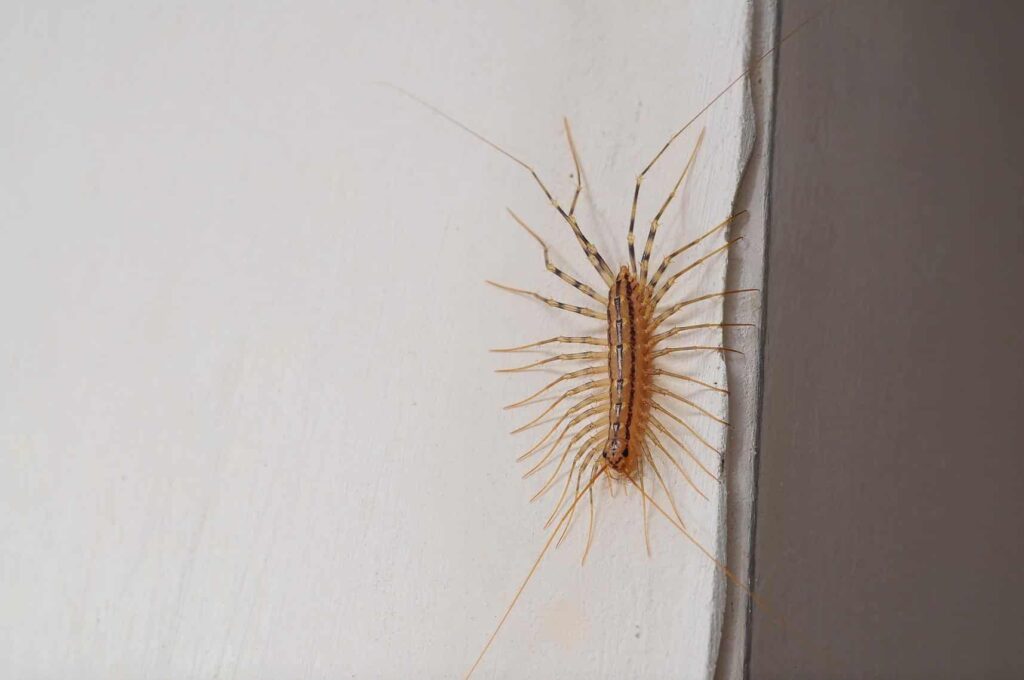
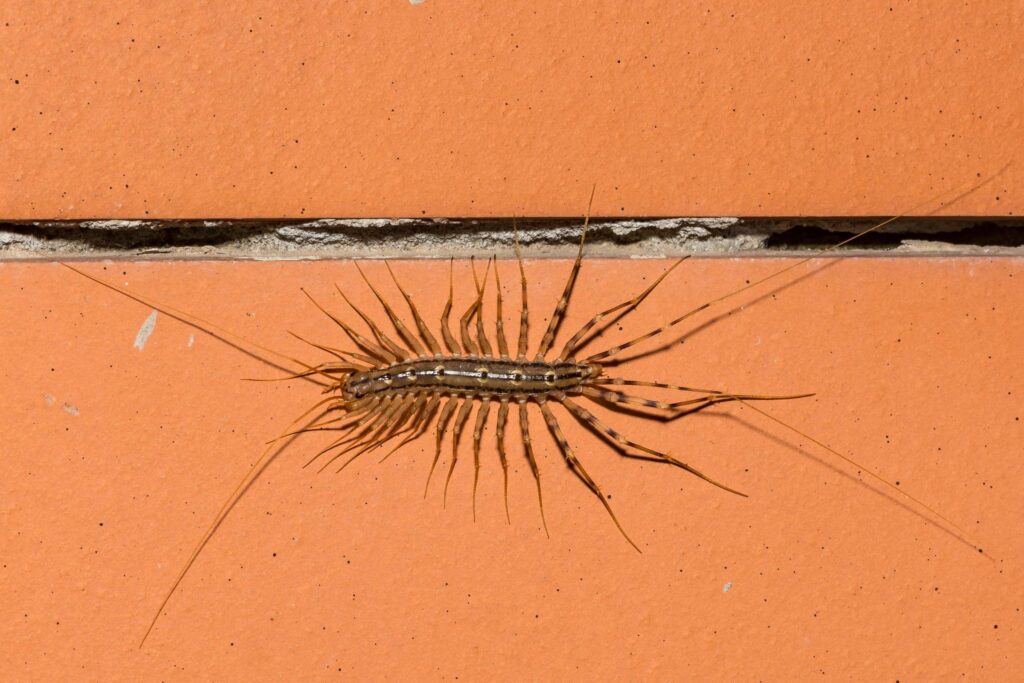
Connecticut homeowners commonly see a few different centipedes and millipedes around basements, bathrooms, crawl spaces, mulch beds, and damp outdoor areas. These pests usually show up where moisture, leaf litter, and shelter are easy to find.
House centipede: This is the most common centipede found indoors in Connecticut. It has long legs, moves quickly, and often appears in damp areas like basements, laundry rooms, and bathrooms.
Soil centipede: These smaller centipedes live in soil, mulch, and under stones or logs. They usually stay outdoors and are more likely to be seen after heavy rain or when the ground is disturbed.
Flat-backed millipede: A common millipede in Connecticut, this type is often found in gardens, flower beds, and around foundations. It is usually dark in color and may come indoors when moisture levels are high.
Round-backed millipede: These millipedes prefer damp leaf litter, woodpiles, and shaded landscape areas. They move slowly and tend to gather in moist outdoor spots, especially in spring and fall.
Greenhouse millipede: This smaller millipede is often found in potted plants, mulch, greenhouses, and wet soil. It can become a nuisance near homes, patios, and garden areas when conditions stay damp.
Homeowners should be concerned about centipedes and millipedes because their presence often points to the kinds of conditions that can lead to bigger pest problems, such as excess moisture, leaks, damp basements, and cracks or gaps around the home. Centipedes can bite if handled, and while their bite is usually not serious, it can still be painful and alarming. Millipedes do not bite, but they can invade in large numbers, release an unpleasant odor when disturbed, and stain surfaces in some cases. When either pest starts showing up indoors, it is often a sign that your home has entry points or moisture issues that should be addressed before the problem grows.
Centipedes and millipedes are common nuisance pests in damp, dark areas around the home. The best prevention starts with reducing moisture, sealing entry points, and keeping outdoor spaces less inviting to these pests.
Reduce moisture inside and outside your home by fixing leaks, using dehumidifiers in basements, and making sure gutters and downspouts move water away from the foundation.
Seal cracks, gaps, and openings around doors, windows, pipes, and the foundation to help block centipedes and millipedes from getting indoors.
Keep mulch, leaf piles, firewood, and other yard debris away from the home, since these pests often hide in moist organic material near the foundation.
Store items off the floor in basements, garages, and crawl spaces, and vacuum regularly to remove hiding spots and any pests that may already be inside.
Call a professional pest control company if centipedes and millipedes keep coming back, since ongoing activity can point to a moisture or entry problem that needs expert treatment and prevention.
Homeowners should hire Richland Pest & Bee Control for centipede and millipede control because our team understands how to identify where these pests are coming from and how to address the moisture, entry points, and outdoor conditions that attract them in the first place. Serving West Hartford, CT, we provide targeted treatments and practical recommendations designed to reduce activity quickly while helping prevent future infestations. With experienced technicians, dependable service, and a focus on long-term protection, Richland Pest & Bee Control gives homeowners a safe, effective way to keep centipedes and millipedes out of living spaces and away from the areas that matter most.
MOST ACTIVE
At night
COMMON AREAS
Basements and damp areas
MAIN CONCERNS
Moisture and indoor entry
LOCAL SERVICE
West Hartford and surrounding CT Communities
Call Richland Pest & Bee Control to request Centipede & Millipede Control.
